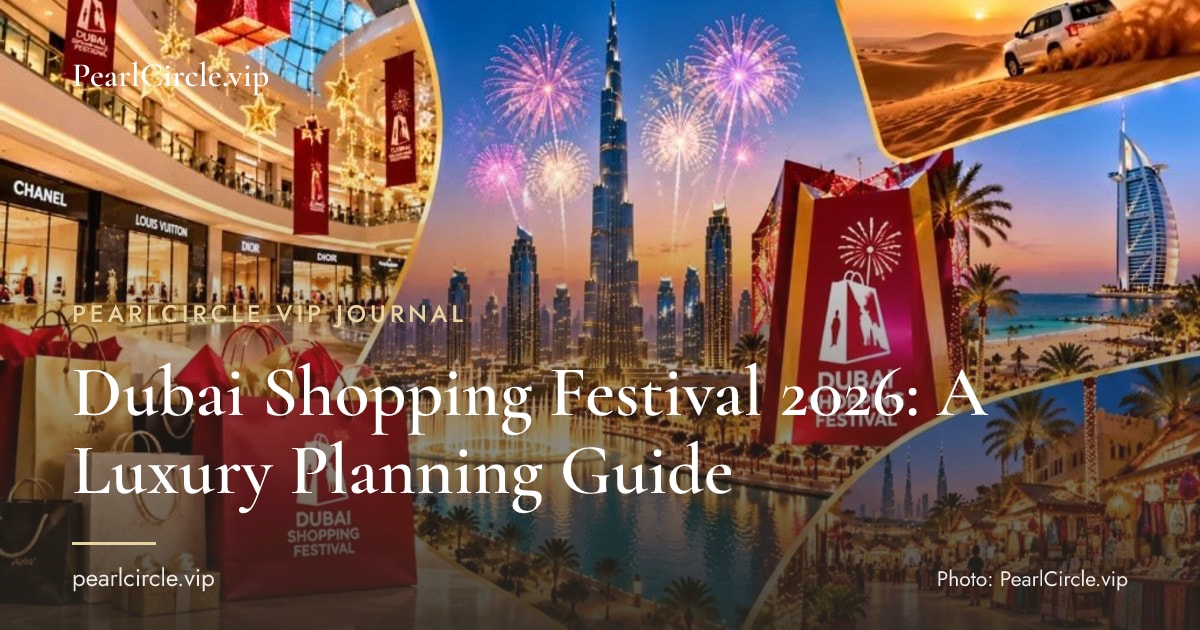
Quick answer: Plan Dubai Shopping Festival 2026 around its published window, 4 December 2026 to 17 January 2027. Divide your days between boutique visits and events, set a budget before arriving, and confirm promotions, raffle rules and closing sales once the official programme is released.
Key takeaways
- The 32nd festival is listed by Visit Dubai for 4 December 2026 to 17 January 2027.
- Last year's edition ran 38 days; this one spans roughly 45, which allows a slower pace.
- Set a budget and a boutique shortlist now, then add offers once the programme is published.
- Confirm raffle terms, sale dates and event locations only from official announcements.
Dubai Shopping Festival 2026 is listed on the Visit Dubai website as running from 4 December 2026 to 17 January 2027. Counted inclusively, that is about 45 days, noticeably longer than the previous edition, which ran for 38 days from 5 December 2025 to 11 January 2026. A longer window gives a discerning shopper room to spread visits out, avoid the busiest weekends and treat the festival as a season rather than a single trip.
This guide sets out a measured way to organise your time, your spending and your boutique appointments. It also lists what is worth confirming once the organisers publish the full programme, because details such as promotions, raffles and event venues are usually finalised close to the opening date.
What is known so far
The dates above are the main fact available at the time of writing. The programme itself, including participating brands, entertainment and any prize draws, had not been set out on the pages consulted. For that reason, it is sensible to plan the structure of your visit now and leave the specifics open.
It helps to look at what the previous edition included, as a loose reference only. That festival offered 38 days of events, surprises and prizes. Spending at or above a stated threshold earned a raffle entry, and the closing stretch featured a final sale. A show combining drones and pyrotechnics was also added. None of this is a promise for the coming edition, but it indicates the kinds of features that tend to be announced: a raffle, a closing sale and large evening displays.
Dubai's official retail calendar also gives context. The festival forms part of a wider annual calendar of citywide events, which Dubai's media office describes as having become a cornerstone of the emirate's economic and tourism success. Retailers apply to take part through an official channel, so participation varies from one brand to another.
Planning your time
With roughly six and a half weeks to work with, a simple three-part structure suits most itineraries.
The opening fortnight, from early December, tends to suit those who want a calmer experience of the malls and boutiques while new collections are in store. The middle weeks overlap with the winter holiday period, when schedules, flights and hotel rooms are usually under more pressure. The final stretch, into mid-January, is the natural moment to look at closing sales, although the date and scope of any such sale should be confirmed from the official programme.
A few practical habits keep the days comfortable:
- Group boutique visits by district, so a morning in one mall or neighbourhood does not involve cross-city travel in the afternoon.
- Leave one unplanned afternoon each week for fittings, alterations or a second look at something you were undecided about.
- Keep evenings free for the displays and entertainment, which are often scheduled at night and can affect road access and parking near the main venues.
- If you are travelling in from another emirate or country, allow additional time on weekends and around public holidays.
Setting a budget
A budget set before arrival is easier to keep than one improvised in the shop. Consider dividing your total into three parts: planned purchases, flexible purchases and costs around the shopping, such as alterations, shipping, tailoring or gifting.
Two points are worth recording in advance. First, whether a promotion applies to the full-price collection, to selected items or only to certain categories, since terms differ by retailer. Second, whether any raffle or prize entry depends on a minimum spend, and whether receipts from several shops can be combined. In the previous edition, a spending threshold of Dh200 or more qualified shoppers for entry into daily and weekly draws, but the rules for 2026 will need to be read afresh once they are published.
It is also useful to note the practicalities that affect the real cost of a purchase: the return and exchange policy, how long a sale item can be held, whether alterations are included, and how international shipping or tax-related refund arrangements are handled. A short written list for each boutique prevents misunderstandings later.
Organising boutique visits
Private or appointment-based visits can make a shopping day more relaxed, particularly at smaller boutiques and ateliers. Where an appointment is possible, it is reasonable to request it a few weeks ahead, name the pieces or categories you are interested in, and ask about the length of the visit.
A short shortlist works better than an open-ended tour. Choose perhaps five to eight destinations across the festival period, ranking them by priority. Place the items you most want to see in the first fortnight, when stock and sizing are broader, and keep lower-priority browsing for later weeks.
For each stop, it is helpful to note the following:
- Opening hours during the festival, which may be extended or altered on certain dates.
- Whether personal styling, fittings or alterations are available, and how long they take.
- Payment methods and any limits on card transactions.
- Delivery options to a hotel or home address.
Many members also find it practical to carry a small folder, digital or paper, with sizes, preferred measurements and notes from earlier visits, so that decisions can be made calmly.
What to confirm once the programme is released
The official programme is where the unanswered questions will be settled. When it appears, it is worth checking the following against the organisers' own channels rather than third-party summaries:
- The full list of participating retailers and malls, and the dates each offer applies.
- The structure and rules of any raffle, including minimum spend, eligible receipts and draw dates.
- The date of any closing sale and the stores involved.
- The schedule and venues of fireworks, drone shows, concerts and other citywide events.
- Road closures, parking arrangements and public transport adjustments on busy evenings.
- Opening hours for malls and individual shops across the holiday period.
Dubai's tourism authority also publishes a list of festival activities that do not carry an admission cost, which may help balance a shopping-focused itinerary with time outdoors.
A note on timing and travel
Because the festival period overlaps with the year-end holidays, flights and accommodation can be harder to arrange at short notice. Fixing your travel dates early, then adjusting the boutique plan around them once offers are announced, is generally easier than the reverse.
If you are based in the UAE, you may prefer to visit on weekday mornings and keep weekends for events. Visitors from abroad may wish to allow a buffer day at the end of the trip for collections, alterations and packing.
Check dates, prices and availability with the provider before you go.
In summary
The published window for Dubai Shopping Festival 2026 is long enough to plan thoughtfully. Fix the dates, outline a budget, shortlist your boutiques and keep a list of questions for the official programme. Once that programme is available, the details can be added to a plan that is already in place.
Sources
Visit Dubai, Dubai Media Office, Khaleej Times